Helmet Mounting Night Vision: Helmets, Shrouds, Counterweights and Retention
By NV2Go Staff. Updated November 22, 2026.
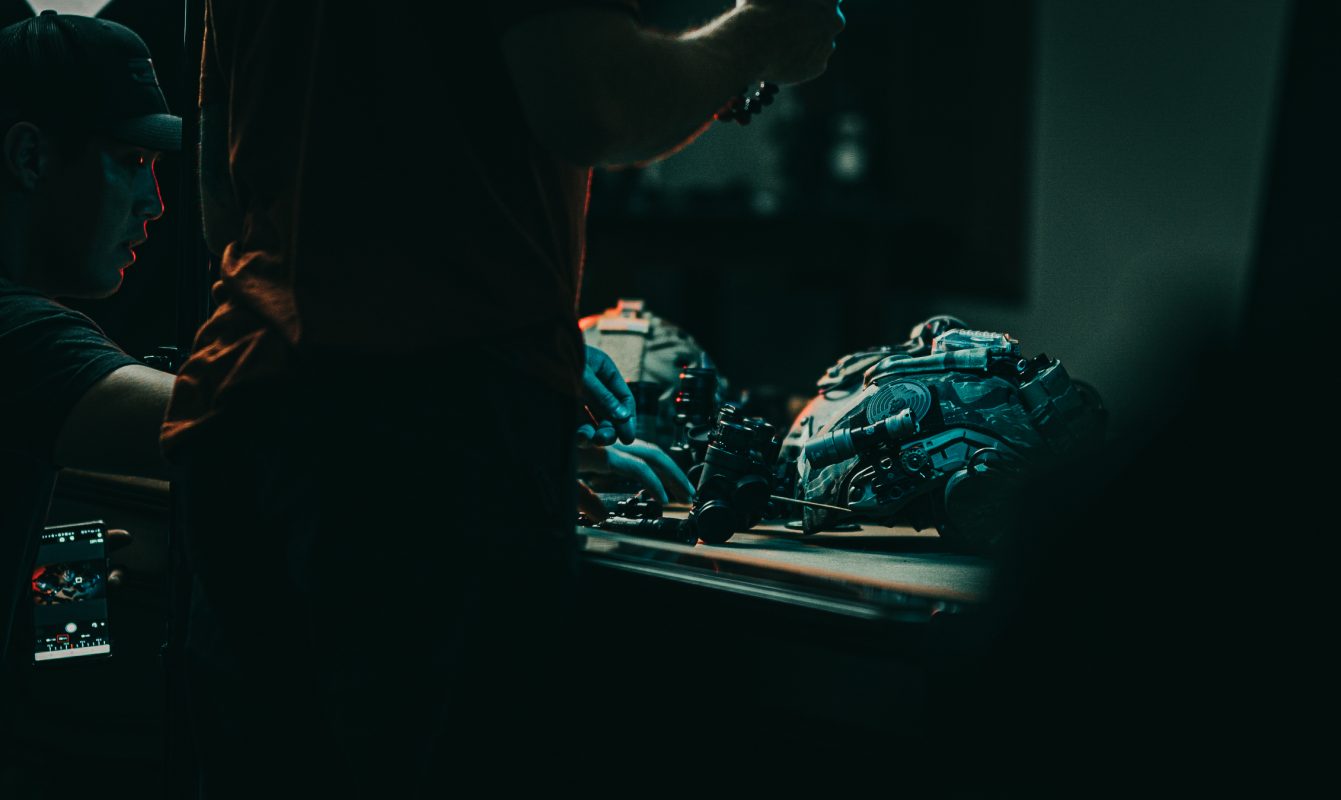
A helmet-mounted night vision device is only as steady as the helmet it hangs from. When you rent with Helmet Mounted, we supply the mount. The helmet, its shroud, the counterweight and the retention system are yours, and getting them right is the difference between a steady, clear view all night and a device that sags, shifts or comes loose.
What We Supply
| Rental | Helmet Mount Issued |
|---|---|
| AN/PVS-14, RVM-14 | Rhino 2 mount with a J-Arm |
| RNVG, DTNVS, ARNVG | Dovetail helmet mount |
| SKEET-IR | Dovetail mount and dual dovetail bridge |
| AN/PAS-23 MTM | Rhino mount and bayonet adapter |
The STALK-IR isn't offered helmet mounted. Mounting hardware not supplied by NV2Go may not be used with our equipment, so please don't bring your own mount, arm or bridge.
What You Bring
1. A solid helmet. We recommend a genuine mil-spec helmet. Among replicas, the PTS MTEK Flux has been a tried and true model with our customers. Avoid very inexpensive knockoff helmets sold online: they are made to look the part, not to work with mil-spec equipment. We often see shrouds that are the wrong depth, width or height, shrouds that flex, and mounts that fail to lock in because the recess is too small, too shallow or in the wrong position.
2. A mil-spec shroud. The shroud is the plate on the front of the helmet that the mount locks into. Helmet Mounted requires a compatible mil-spec shroud. A mil-spec shroud is all you need, and any shroud from Wilcox or Norotos is a safe bet.
3. A counterweight. Recommended. A night vision device puts its weight out in front of your face, and a counterweight on the back of the helmet balances it, so the helmet sits level and your neck isn't working against it all night. A dual-tube goggle is the heavier load: the RNVG weighs 555 grams without its battery, against 300 grams for an RVM-14 with its battery. Bring your own: we don't recommend a particular counterweight, and how much weight to use is a matter of preference. Some of our rentals are compatible with an external battery pack, and you're welcome to bring your own if you can confirm it is compatible with the device you rent.
4. A good retention system. Recommended. The harness and chin strap hold the helmet to your head. With weight on the front, a loose helmet tips forward and the eyepiece moves out of line with your eye. Adjust it so the helmet stays put when you turn your head or move quickly.
Before the Event
- Put the helmet on with its retention system adjusted, and check that it doesn't shift when you move.
- Check that the shroud is firmly attached to the helmet.
- Pack your counterweight.
- Book Helmet Mounted when you reserve. Each rental needs its own mount, and the price is shown on the rental page.
At Check-In
Our staff will help you fit the mount to your helmet.
- Monoculars: the Rhino 2 adjusts three ways, vertical, horizontal and tilt. Set it so the eyepiece sits squarely in front of your eye. The J-Arm can be moved to either side for your preferred eye; loosen its knob first, because turning it while tight can strip the mount.
- Goggles: on the DTNVS and ARNVG each pod flips up on its own and switches off when it does, and the pods fold back toward the helmet when stowed.
If your helmet can't hold the mount safely, we usually recommend running the device handheld. More often than not, someone at the event may be willing to lend you a spare helmet.
For every rental's mounting options, see Handheld, Helmet or Rail. For your first night out, read Your First Night Under Night Vision.